
Growing Up Sedaka
A double dose of dementia illustrates the power of music
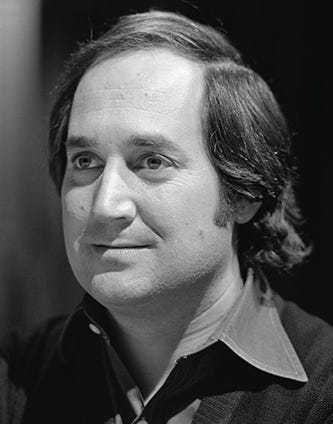
That’s Where the Music Takes Me
When I visit my family in Southern California, I am hit with a double dose of dementia.
Both my aunt, who was officially diagnosed with Alzheimer’s in 2020 (and whose journey from living alone to assisted living I’ve documented here), and her brother — my father —have the disease. The rest of my living family (other than my wife) consists of my mentally sharp but frazzled 83-year-old mom and my special needs 23-year-old nephew, who lives in a group home.
Aunt Arlene was like a second mom to me. She was the cool aunt. The one who smoked pot. The one whose friends — unlike my parents’ — didn’t all fit in a white, middle-class, straight, married bubble. The one with a deep record collection.
The six-year difference between my aunt and my dad meant that my dad spent his teens and early twenties in the 1950s, while my aunt was 16 to 26 during the 1960s.
This difference was clearly reflected in their musical tastes. My dad's record collection leaned heavily toward easy listening artists and Broadway show soundtracks. Perry Como, Frank Sinatra, Barry Manilow, West Side Story, My Fair Lady. And the artist he’d play most often: Neil Sedaka. I love and appreciate all of the above now, but as a young kid and teen forming his own musical identity, I gravitated heavily toward my aunt’s collection.
My aunt’s records (which were welcomed into my collection a few years ago) were filled with rock, R&B, and jazz artists of the time. Sam Cooke, Aretha Franklin, The Beatles, The Rolling Stones, Janis Joplin, McCoy Tyner, Herbie Hancock, Miles Davis.
As the 70s bled into the 80s, I would veer away from the classics, toward the musical styles of the day, becoming a metalhead, then a punk-rocker, and finally, a severe-haircutted new-wave aficionado.
All this genre-hopping was additive, not subtractive. I kept my Iron Maiden and Metallica records when I began buying albums from Dead Kennedys, DEVO, and A Flock of Seagulls.

When I moved my aunt Arlene into assisted living in 2021 (I had become her durable power of attorney in 2020), I chose a facility that was a 20-minute commute from my parents' home. Prior to that, it would take more than 45 minutes to drive between their houses.
At first, my dad would visit his sister every week. Sometimes he’d come see her twice a week.
“Your aunt made no sense. I had no idea what she was babbling about.” This was a common refrain whenever I asked him how the visit with his sister went. “But she seemed to be happy,” he’d usually add, which made me feel a bit of relief.
When my dad began showing clear signs of dementia — asking the same questions over and over, getting lost driving to the supermarket, only showering or shaving when loudly encouraged — the visits began to dwindle. Once every couple of months, my mom would drive him to see his sister.
Soon enough, with his dementia exacerbated by chronic sciatica, getting my dad into the car became an exhausting endeavor. My mom, who stood at 4'9", saved these travels for essential events, like doctor's appointments.
So when I make my quarterly treks from Oakland, California, to Ventura, I prioritize taking my dad to see his sister.
Which is what I did recently, the day after Neil Sedaka had died.
Sedaka’s Back
Neil’s 1975 comeback album, Sedaka’s Back, his first in nine years to reach the Billboard charts (the British Invasion swept solo singers like Sedaka from relevancy and the popular market), was a staple on the home turntable. Songs like “Laughter in the Rain,” “That’s Where the Music Takes Me,” “Love Will Keep Us Together,” and “Solitaire” were ubiquitous on the radio as well (at least on KRTH-101, the easy listening station my dad kept his stereo tuned to).
The success of Sedaka’s Back, which was his first album released on Elton John’s new Rocket Record Company label, continued with his two follow-ups, The Hungry Years (1975) and Steppin’ Out (1976). My dad had both of these albums in his collection.
Neil largely credits Elton for reviving his career. Elton even sings with Neil on the song, “Bad Blood.”
I wrote about two songs from The Hungry Years — “Bad Blood” and Neil’s jazzy ballad remake of his 1962 hit, “Breaking Up is Hard to Do” — in an essay last year.
Breaking Up With a Missing Person Is Hard to Do

I had planned on structuring this piece, this first essay in more than two months, around Neil Sedaka’s song “Breaking Up Is Hard to Do."

Having seen firsthand the power of music to bring joy and calm to people with dementia, I decided to stream a playlist of Neil Sedaka hits in the car with my dad on the way to see my aunt.
On the dozens of times I’d driven my aunt to various doctors’ appointments, and to see my parents (before Arlene became wheelchair bound), I would play music from artists like The Beatles, Aretha Franklin, and Santana in the car. Without exception, she’d sing along to every song, her head bopping to the rhythm. I’d often join in, and she’d look over at me and laugh; the agitation, anger, and paranoia she’d exhibited the first couple of years with the disease, nowhere to be found.
I hoped that playing Neil Sedaka might trigger something similar in my dad.
Until two years ago, my father had been extroverted, quick to make friends, and always with a full social calendar. He was an elementary school teacher, and in the summers when classes were out, he’d sell women’s clothes out of the garage as a side hustle. It was a way to meet new folks in the neighborhood (mostly women) and maintain friendships with the couples (mostly the wives) my parents already socialized with.
My dad was the opposite of a macho manly man. He never taught me how to fix a leaky faucet, but he did show me that girls (and, later, women) were to be respected and appreciated, and that they made better friends than boys and men. He was all about feelings (“whoa oh oh, feelings”) and expressed them in words and actions.
But ever since the dementia took hold, his personality completely flipped.
Now he spends nearly all day in front of the TV, watching whatever channel 7 (ABC) is airing because he can no longer figure out how to use the remote. Talk shows, game shows, soap operas, the news, he’ll watch it all until he falls asleep, and my mom turns off the TV.
He refuses to do any of the physical therapy exercises recommended for his chronic sciatica and uses a walker to get around. When my mom tries to encourage him to do his stretches, he accuses her — loudly — of trying to control his life. I’ve witnessed his outbursts several times, and they've been directed at me as well. The sad irony is that because of his disease, my mom does need to “control” his life in almost every way. Cooking for him, making sure he takes his pills, checking his blood sugar (he has diabetes), and coordinating doctors’ appointments.
The first song to play on the drive to see my aunt was “Love Will Keep Us Together.”
The Captain and Tennille version, which went to #1 on the pop charts in 1975, is the one most people will recognize. Neil’s original never charted and, surprisingly, was never released as a single in the U.S.
I’m sure my dad was familiar with Neil’s version, though. I remember Dad playing his 1973 album The Tra-La Days Are Over, which featured the song.
I glanced over at my dad. No clear response.
The next three songs to play were “Calendar Girl,” “The Immigrant,” and “Laughter in the Rain.”
I looked back at my dad to see if these songs, which he surely hadn’t heard in many years, were affecting him in any way.
He wasn’t singing along. He wasn’t swaying his head to and fro. He just gazed out the front window. Was he lost in thought? Were these tunes triggering reverie, but he wasn’t expressing it in any obvious way?
Solitaire
When “Solitaire,” perhaps my favorite Neil Sedaka song (and one of the most heartbreaking tunes ever written, IMO), began to play, I was certain I’d get a reaction from my dad.
Nothing.
I decided to try something more overt.
“Dad, did you hear that Neil Sedaka passed away earlier this week?”
“Really?” he said, sounding more surprised than sad. “That’s too bad.”
I’m not sure what I expected. Some sort of emotional reaction, I suppose. Something that resembled the boisterous, deep-feeling dad I’d known most of my life. I decided not to mention that Neil was 10 months younger than him. He didn’t need the reminder that he was outliving many of his contemporaries.
I couldn’t help but reframe the lyrics of this ode to loneliness in the context of what it must feel like to live with dementia.
The character in “Solitaire” has become numb to emotion, unable to share his heart with his lover, who leaves him because he is unable or unwilling to express his feelings.
There was a man, a lonely man
Who lost his love through his indifference
A heart that cared, that went unshared
Until it died within his silence
Then the chorus of the song goes:
And Solitaire's the only game in town
And every road that takes him, takes him down
And by himself, it's easy to pretend
He'll never love again
And keeping to himself, he plays the game
Without her love, it always ends the same
While life goes on around him everywhere
He's playing Solitaire
It’s clearly about a lost love, and maybe depression, but not dementia. I’m being silly trying to make the song mirror my father’s experience with the disease.
I crave moments when life imitates art. I’m constantly searching for the perfect song, the perfect book, the perfect film that reveals insight into my own life experiences. That helps me try to make sense of the joys and sorrows in the world.
I watched my aunt’s personality change from angry and bitter to sweet and kind as her dementia progressed. I’m now witnessing my sweet and kind father become angry and bitter in his journey with the disease.
For others with family members struggling with dementia, their loved one might have transitioned from angry to angrier. Or gentle to gentler.
It seems to be a crap shoot. A roll of the dice. Even if you get flashes of winning, you ultimately lose.
It makes playing solitaire seem all the more appealing.
All You Need is the Music
“Feel free to leave your father there,” my mother whispered to me before my dad and I left to visit my aunt. It’d been an especially tough week, and though she was (mostly) joking, I couldn’t help but think of those words as my dad and I slowly walked the halls of the memory care facility. At some point, he might live in a community like this.
Dad knew where he was going, but checked with me before we made every turn toward Arlene’s room. “We go this way?” “Is that her room on the left?”
As we entered my aunt’s room, she was sitting in her wheelchair, watching the digital photo montage on her Frameo that I bought her two years ago. Every time I visit, I upload new images to it, so that she can see updated photos of me, my wife Karen, and our dog Bernie.
I helped my dad lean forward to hug his sister, and the love between them was palpable. After a couple of “how are you doings?” which got generic responses of “fair to middling” and “I’m alive,” the two of them settled in front of the Frameo and watched images of our extended family from the past 60 years cycle in 10-second increments.
“There’s Howie,” my aunt said as a photo of me as a 20-something appeared on screen. “There’s Steve,” my dad announced confidently, when a picture of Andrew came next.
I didn’t have the heart to correct them. They weren’t wrong, if you look deeper. We are all a part of each other.
For the next 20 minutes, my aunt and dad sat rapt in front of the digital photo album, smiling and pointing out the family members on the screen, sometimes correctly.
As I watched them watching the photos, it became clear that if I had to pick a Neil Sedaka tune to symbolize my dad, and also my aunt, it would have to be “Love Will Keep Us Together.”

Have you experienced the power of music for opening realms of connecting with loved ones with dementia?
Are you familiar with any of Neil Sedaka’s music? How did you hear it? From a different artist’s version of one of his songs?
I’ll be continuing my Sedaka tribute, in a collaboration with Brad Kyle, who writes the fabulous Front Row & Backstage newsletter, to honor the music of Neil Sedaka in an upcoming post. Stay tuned for that!
As always, thanks for reading. I’d love to hear any thoughts or reactions to this essay in the comments.
This was beautiful and resonated with me, as you can imagine, on so many levels. Supporting loved ones through their dementia takes a toll but helps us grow in so many ways, all at once. The power of music to carry us through and to help people in their darkest hour -- even when they don't realise it -- will never cease to amaze me.
PS: As a soul music lover, I would have killed to see your aunt's record collection!
Again a beautiful and touching piece about your aunt and father, Steve. Your writing really pulls the reader into the story. Like I said before, it almost makes you feel as if you’re sitting in the room beside you as everything unfolds. It’s another reminder of how music can be such a powerful conduit for emotions and memories. You truly are a fantastic writer.